
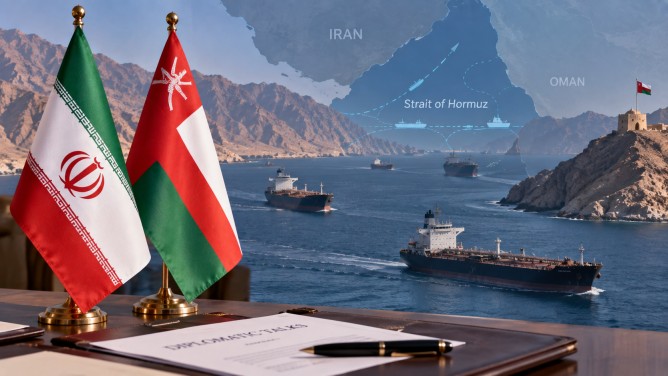
A critical meeting involving Iran, Oman, and other Gulf nations regarding new shipping protocols through the Strait of Hormuz has been delayed indefinitely without a set date for rescheduling. Originally slated to occur in Muscat, the gathering aimed to address regional security and deliberate on an Iran-Oman initiative to manage commercial shipping through this crucial maritime corridor.
The postponement comes in the wake of an incident where an Iranian commercial vessel was reportedly attacked near Qeshm Island, resulting in the death of one person and injuries to four crew members. Iranian state media reported the vessel was struck by a projectile while navigating the Strait of Hormuz, which led to a fire and subsequent evacuation of the crew. This development underscores the ongoing security challenges in the area.
Oman’s Foreign Minister Badr Albusaidi indicated that the decision to delay was made in the spirit of achieving consensus among the involved parties. Iran confirmed the decision was a mutual agreement with Oman, influenced by requests from several regional countries. The talks are crucial as Iran and Oman had been negotiating alternative shipping routes through the Strait. The proposed plan would see vessels entering the Persian Gulf via Iranian waters, with outbound traffic utilizing both Iranian and Omani waters. However, Iran has emphasized that reopening the Strait under this proposal would require meeting its terms, potentially including fees for using these routes.
The postponement occurs amid rising diplomatic tensions in the Gulf region. Saudi Arabia has expressed a desire for revisions to the Iran-Oman plan, while Bahrain has declared it would abstain from participating in the discussions. This uncertainty around the Strait of Hormuz has been a contributing factor to increased oil prices. Compounding the situation, Saudi Arabia continues to keep its 1,200-km East-West oil pipeline closed following drone attacks, limiting alternate routes for oil transport to the Red Sea.
With commercial traffic through the Strait of Hormuz significantly diminished, the disruption poses a serious threat to global energy markets, given that the waterway is a pivotal passage for oil shipments worldwide. The ongoing pipeline closure by Saudi Arabia could jeopardize a substantial portion of global oil supplies, adding to the strain caused by the reduced shipping activities through the Strait. Consequently, Brent crude prices have surged above $100 a barrel amid these escalating regional tensions.