
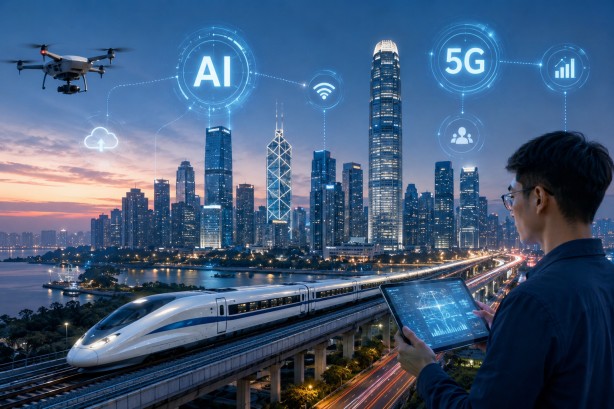
China is rapidly advancing its digital economy through enhanced adoption of artificial intelligence, robust digital infrastructure, and smart technologies in various sectors, including industry and public services. By 2025, the nation’s digital economy reached a substantial 49 trillion yuan ($7.22 trillion), accounting for approximately 35% of its gross domestic product (GDP). Meanwhile, core digital industries contributed over 10.5% to the GDP, highlighting the sector’s growing significance.
As part of its 15th Five-Year Plan spanning from 2026 to 2030, China is setting ambitious goals to further integrate AI applications, bolster data security, and refine digital governance. The plan also emphasizes fostering international cooperation in digital technologies. This strategic framework aims to position China as a global leader in digital innovation and governance.
Cities like Beijing are at the forefront of this digital transformation, showcasing practical implementations of advanced technologies. These include internet hospitals that revolutionize healthcare delivery, AI-driven traffic management systems that enhance urban mobility, and shared medical imaging platforms that improve diagnostic efficiency. Furthermore, smart utility networks are being developed to optimize resource management and service delivery, demonstrating tangible benefits to economic growth and public services.
The expansion of these digital initiatives underscores China’s commitment to leveraging technology to drive economic development and improve quality of life for its citizens. By promoting a smart and interconnected infrastructure, China is setting a benchmark for other nations aiming to harness digital potential in their economies.