
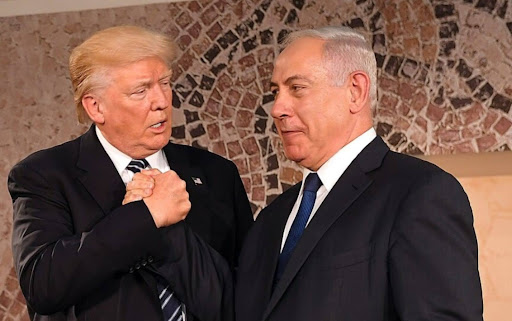
At the heart of the Trump-Netanyahu strategic divergence is a paradox that makes it particularly difficult to resolve: both leaders agree deeply and genuinely on the problem — Iran is a dangerous, destabilizing power that poses a serious threat to regional and global security — but they disagree fundamentally on what solving that problem requires. Shared problem definition, without shared solution strategy, is one of the most challenging configurations in alliance management. It provides enough common ground to maintain the partnership while generating enough divergence to produce recurring friction.
The shared problem definition is not rhetorical or superficial. Both Trump and Netanyahu have dedicated significant political capital to the claim that Iran represents a serious threat. Trump’s Iran policy has been consistent across administrations — he has treated the Islamic Republic as a primary adversary and organized his Middle East strategy around containing its ambitions. Netanyahu has spent four decades making the same argument with even greater intensity. Their shared view of the problem is one of the genuine foundations of their partnership.
The divergence in solution strategy flows from different assessments of what the Iranian problem fundamentally consists of. Trump treats it as a specific capability problem — Iran’s nuclear program — that can be addressed through targeted military action on specific facilities. If the nuclear capability is sufficiently degraded, the most dangerous of the Iranian threat is neutralized. Netanyahu treats it as a regime problem — the Islamic Republic itself — that cannot be permanently resolved without addressing the government that drives the nuclear program, the proxy network, and the regional ambitions.
Director of National Intelligence Gabbard confirmed the solution-strategy divergence officially. The paradox it creates for the alliance is real: enough shared conviction about the problem to maintain cooperation, enough divergence about the solution to generate regular friction. South Pars was a concrete expression of the paradox — both leaders were striking Iran, both claiming to address the same threat, and doing so in pursuit of fundamentally different solutions.
Resolving the paradox requires either converging on a shared solution strategy — which would require both Trump and Netanyahu to revise their assessments — or developing more explicit protocols for managing the divergence when it produces operational conflicts. Neither is easy. Both are necessary.